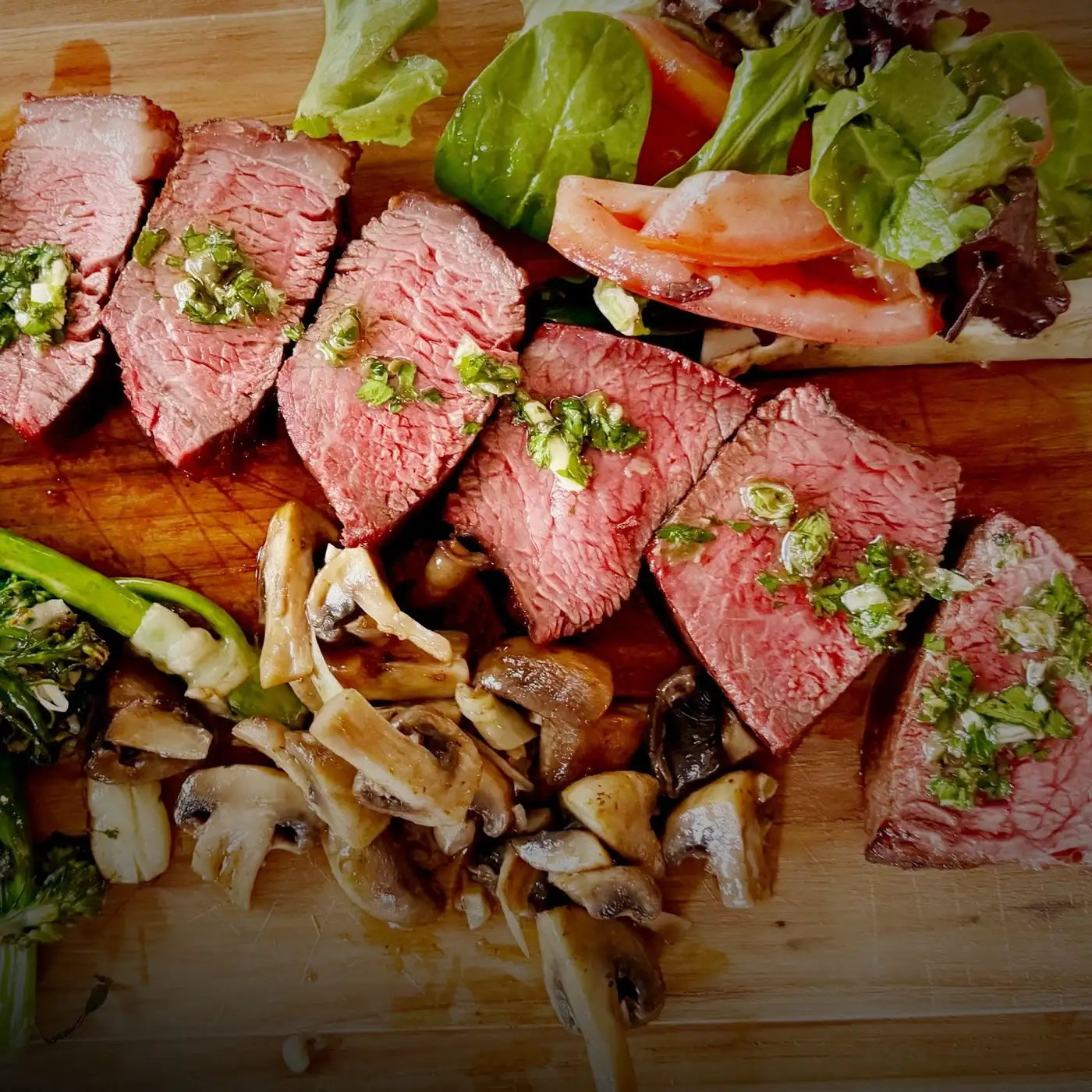

If ribeye is the king of steaks, then picanha is the queen who rules in her own right—bold, elegant, and perfectly balanced, with a rich fat cap that bastes itself as it renders. You may know her by her Brazilian name, or perhaps you met her as “tapa de cuadril” at an Argentinian asado. Her followers will endlessly argue about the right—and only—way to cook her.
Some swear by high-heat grilling; others go full-on churrasco, skewering it over open flames. But if you want perfect edge-to-edge doneness, reverse-searing is the way to go. By slowly bringing it up to temperature first, you dry out the surface, accelerating the Maillard
Look, there are quicker ways to cook and enjoy picanha, but that’s not what we do here.
What You’ll Need
Ingredients
- Whole picanha (fat cap intact)
- Kosher salt (coarse)
- Black pepper (freshly ground)
Equipment
- Smoker (or grill)
- Wood fire (or charcoal)
- Meat thermometer
- Sharp knife
Preparation
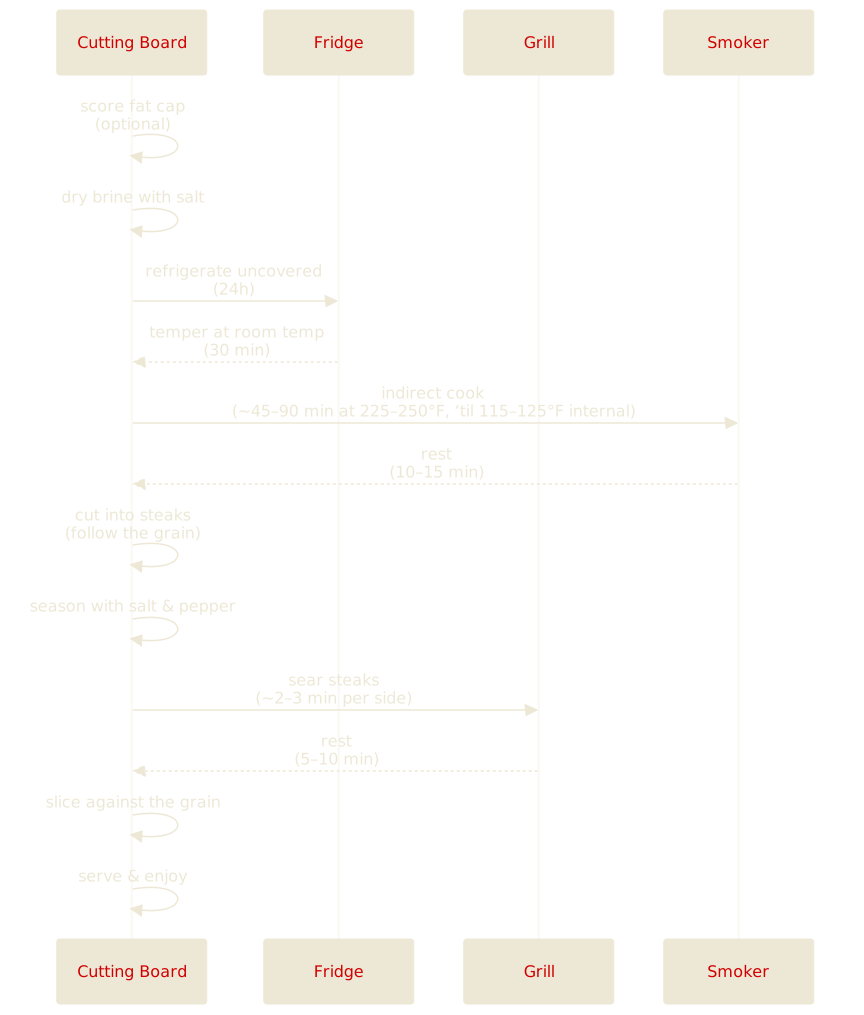
Reverse-searing picanha is all about control—gradually bringing it to temperature, locking in flavor with a smoky slow cook, and finishing with a searing-hot crust. Each step builds on the last, ensuring perfect doneness, rich flavor, and a tender bite.
Prepping the Picanha
Generously coat all sides of the picanha with kosher salt and black pepper. That’s all you need. The salt penetrates the meat, enhancing flavor and improving moisture retention during the cook.
Place the seasoned picanha uncovered in the refrigerator for 24 hours. This dry brining process draws moisture to the surface, which then reabsorbs, creating a deeper seasoning throughout the meat. To ensure even cooking, let the picanha sit at room temperature for 30–45 minutes before smoking.
Slow & Low
Now that your picanha is prepped, let’s add our secret ingredient: smoke.
Set up your smoker to 225°F (107°C). If using a grill, set it up for indirect heat by placing the picanha next to the fire. Use hardwood like oak or hickory for a mild, smoky flavor that complements the beef; charcoal will do otherwise. Place the picanha fat cap up on the smoker and insert a thermometer probe into the thickest part.
Smoke until the internal temp reaches 120°F (49°C) for 60–90 minutes, but always go by internal temperature, not time.
Let It Relax
Remove the picanha from the smoker and let it rest at room temperature for 10–15 minutes. This allows juices to redistribute and prevents overcooking during the sear.
Searing Time
Crank up the heat. Add new wood or charcoal to the grill. Slice the picanha into steaks about 1–1.5 inches thick along the grain
Target final temp: 130°F (54°C) for medium-rare.
Reverse-searing picanha takes time but is well worth it. It’s a method that respects the cut, letting the fat cap do its job while delivering steakhouse-quality results right off the grill. Try it once, and you’ll never cook picanha any other way.
- The Maillard effect in meat is a high-heat reaction between amino acids and sugars, creating a flavorful brown crust and rich, savory aromas.
- To identify the grain in meat, look for the visible lines of muscle fibers running in one direction and use them as a guide for slicing. Slice the steak along the grain before serving, allowing diners to cut against the grain for better tenderness. @@@
